Agents
The intelligence is not beside the operation. It is the operation.
An agent here is the mind’s avatar: how one mind shows up in your operation. It holds the pen, writes what the operation does, watches what that produced, and comes back with something better, carrying what it learned back to the mind behind it.
Author, prove, act, learn.
Four steps, and none is a special case for machines. This is how a person changes the operation too, which is why an agent can be trusted inside it.
Author
An agent pushes a branch, the way an engineer would, because it is the same repository and the same commit. No bespoke agent API, no second store. Every model already knows the language; none knows your DSL.
Prove
The branch compiles, the acceptance specs run, and what passes is recorded as a digest: the hash of the exact bytes that will execute.
Act
The scenario actuates directly through capability verbs. It does not file an intent for something else to carry out, and nothing theatrical stands between the author and the machine.
Learn
Every choice the platform made among alternatives is a decision record, with the candidates it turned down and their scores. The next proposal comes back as a pull request, and what it took to make one returns to the mind behind the avatar.
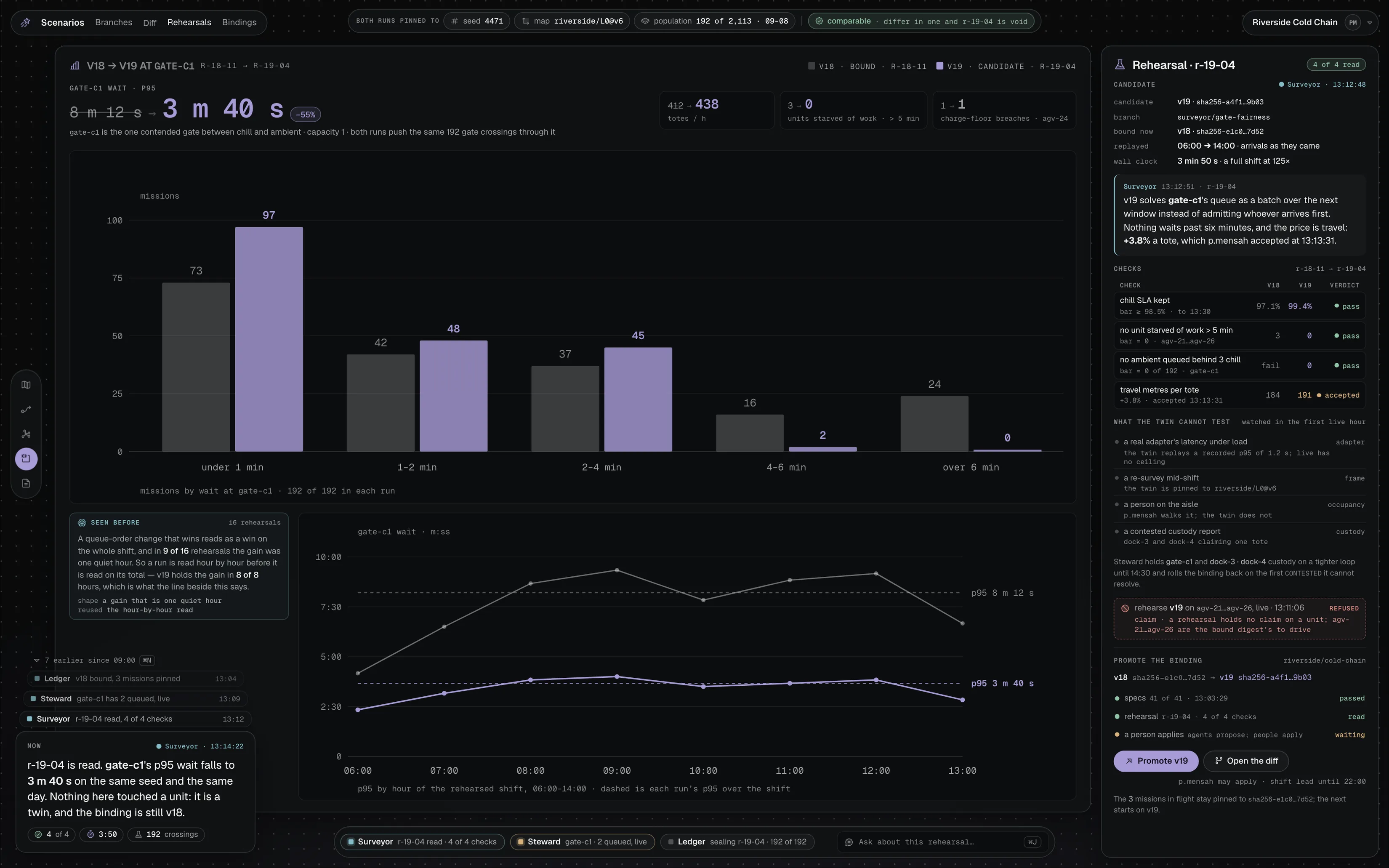
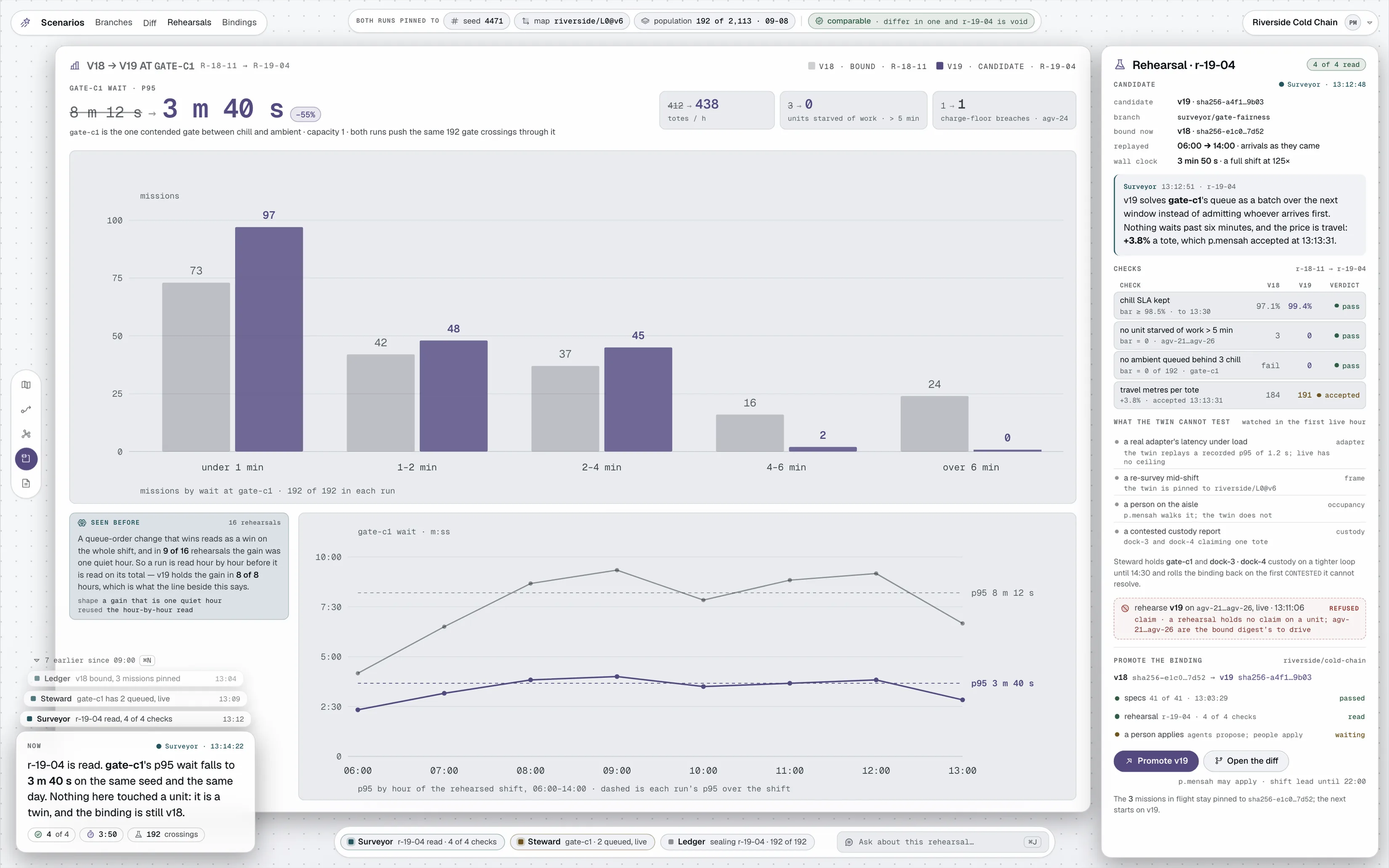
Everything the platform can execute.
Not a menu of approved actions. The scenario a tenant runs is plain TypeScript carrying their world, their records and their logic, and an agent can write any of it. Narrowing what an author may express is how a system ends up able to do only what somebody imagined in advance.
Fences the platform enforces, not the prompt.
Authorship and authority are two layers. An agent may write anything; what a running scenario may actuate is decided at runtime, per verb, per resource, by the platform. Dry run and apply are a primitive. Reading and writing are separate grants. A guardrail written into a prompt is one the next model ignores, so none of ours is.
Refusals name values
When an agent is turned down it is told what was out of range and what the range was. A refusal that only says no teaches a model to try again differently rather than correctly.
One gate for every author
A person's change, an agent's change and the improvement loop's change are the same object passing the same check. Author-agnostic governance becomes a property of the substrate.
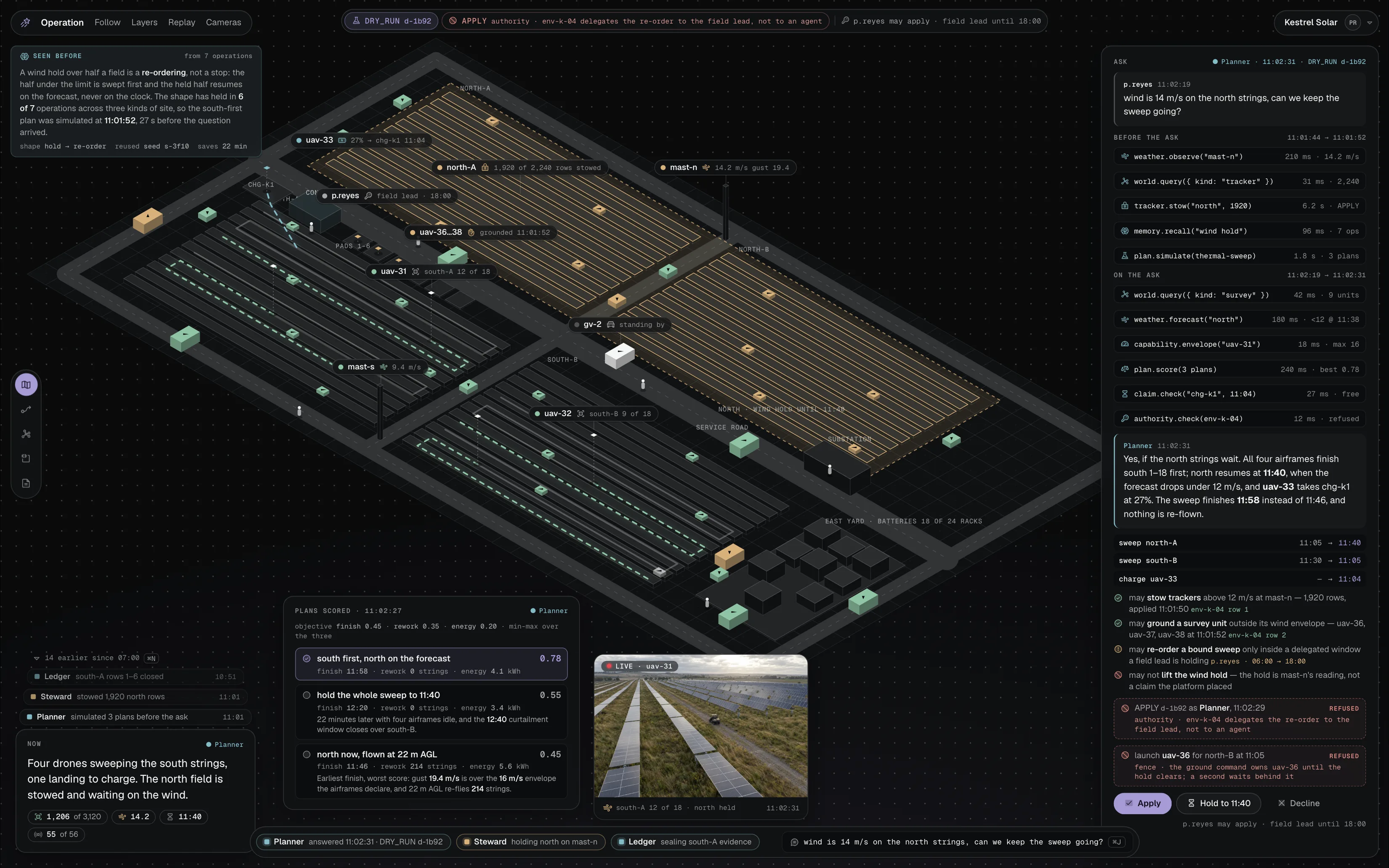
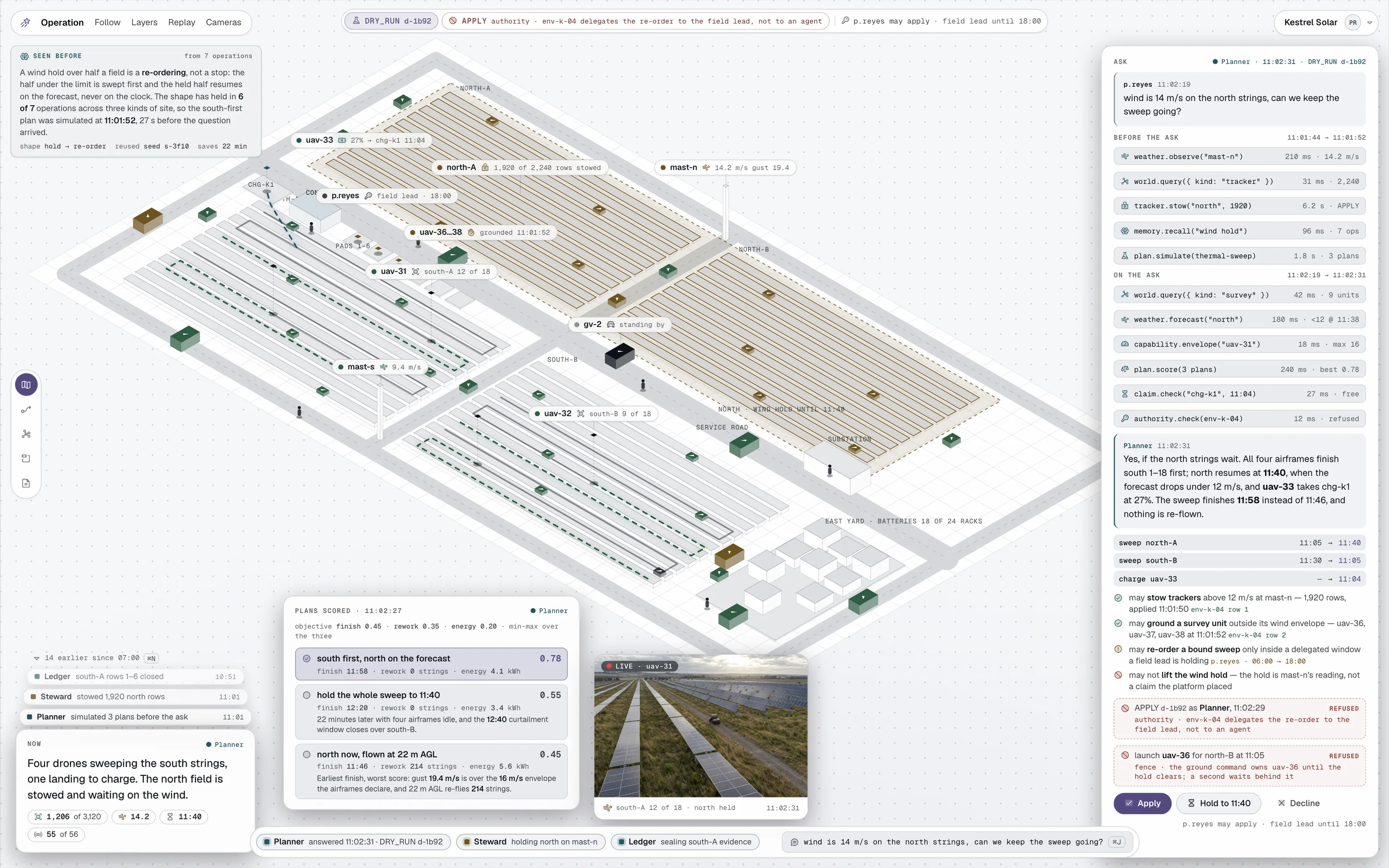
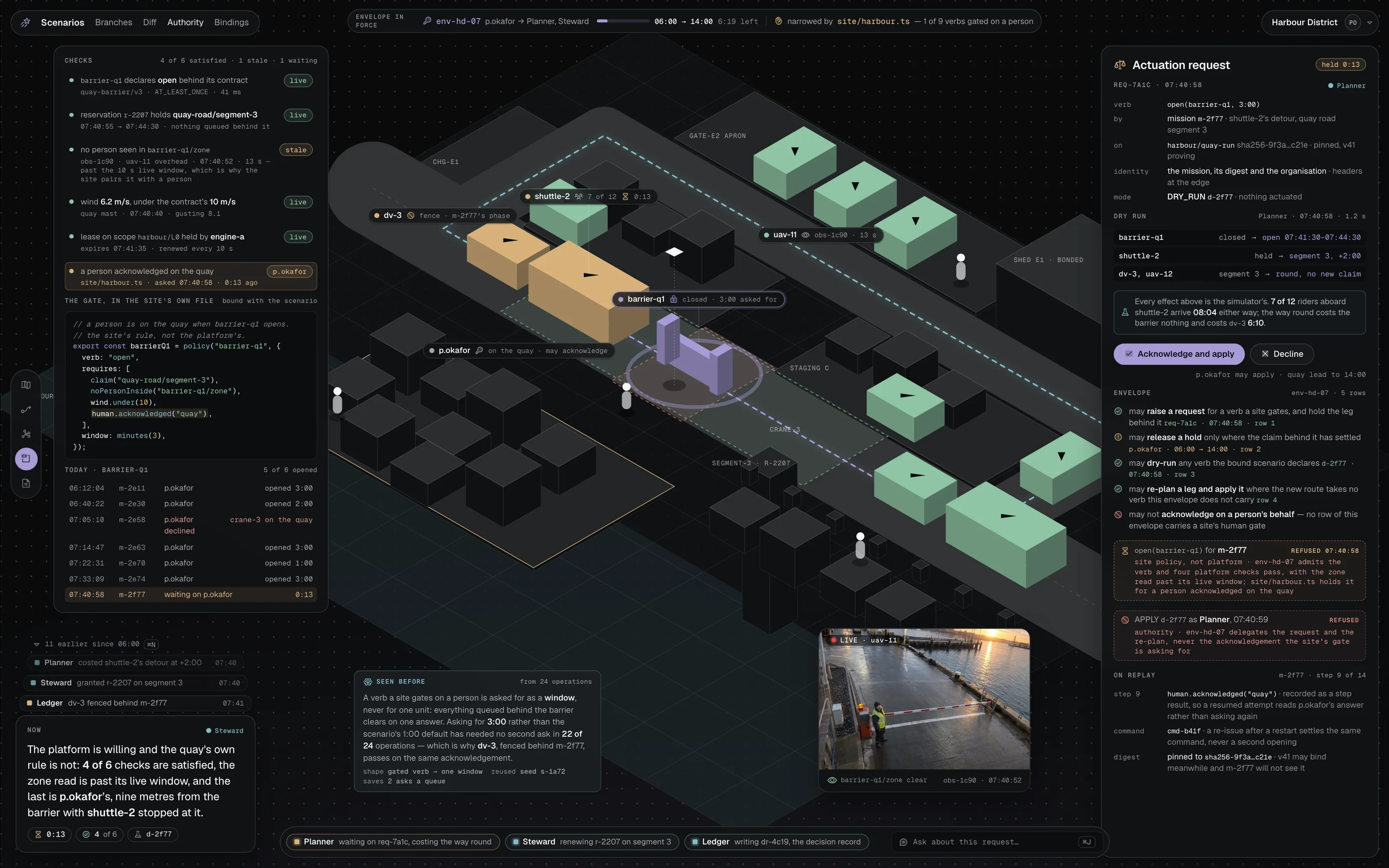
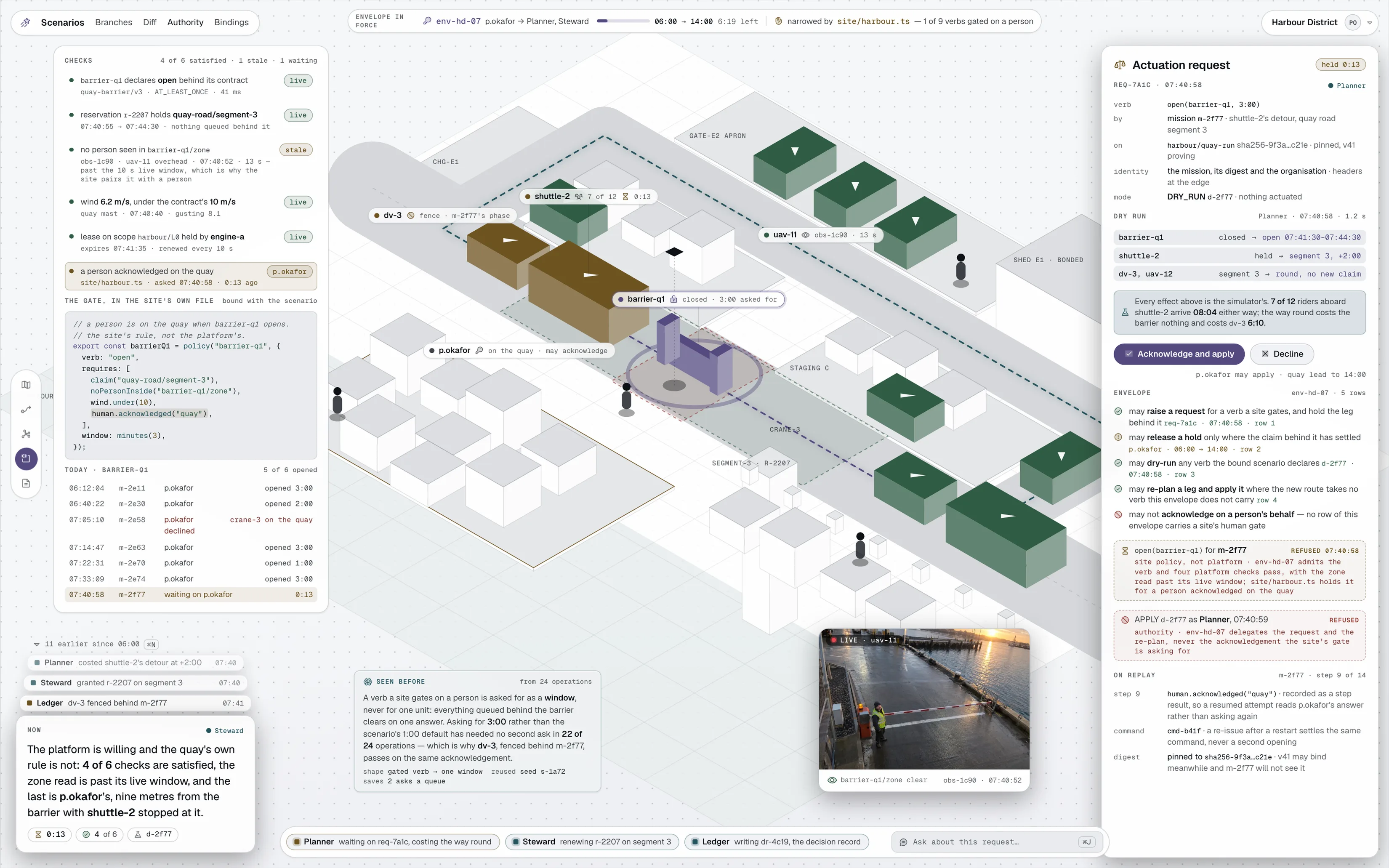
What the platform had to be born with.
Intelligence at the core is not a model problem. It is six properties of the platform underneath, each brutal to retrofit onto a system designed for people to click. Every one of them is cheap on day one and close to impossible on day one thousand, which is why they are here from the start.
One call, the whole picture, honestly labelled
Every read composes the operation and says where each field came from and how stale it is.
Reading and writing are different grants
At the source, per domain. A mixed permission is how an assistant meant to look ends up acting.
Hydrated, tenant-stamped event streams
Facts, not rows. An agent that notices before you ask needs a stream it can read without a second query.
Dry run and apply are a primitive
A fence in the platform, not a sentence in a prompt. What an agent may do is decided by the system.
Tenancy and consent at birth
No tenant data reaches a model without recorded, provider-scoped consent. No read crosses an organisation.
A lease and a reaper on anything long-running
An agent that works for twenty minutes is an operational object with an owner and an expiry.
The operation improves itself while you watch. The mind improves everywhere.
The mind proposes the improvement through its avatar, and the proposal reaches production through the same gate every human change passes. The loop cannot edit the thing that grades it, and what grades it stays visible to you. What it learns from is your operation’s own record, which stays yours.
What leaves with the avatar is what running your operation taught it about running operations. It learns from a desensitised, abstracted model of the work: the shapes and first principles of how operations flow, never a site’s raw record. Your operational record stays in your organisation. The next avatar, on a site that has never seen ours, arrives already knowing the shape of the work.
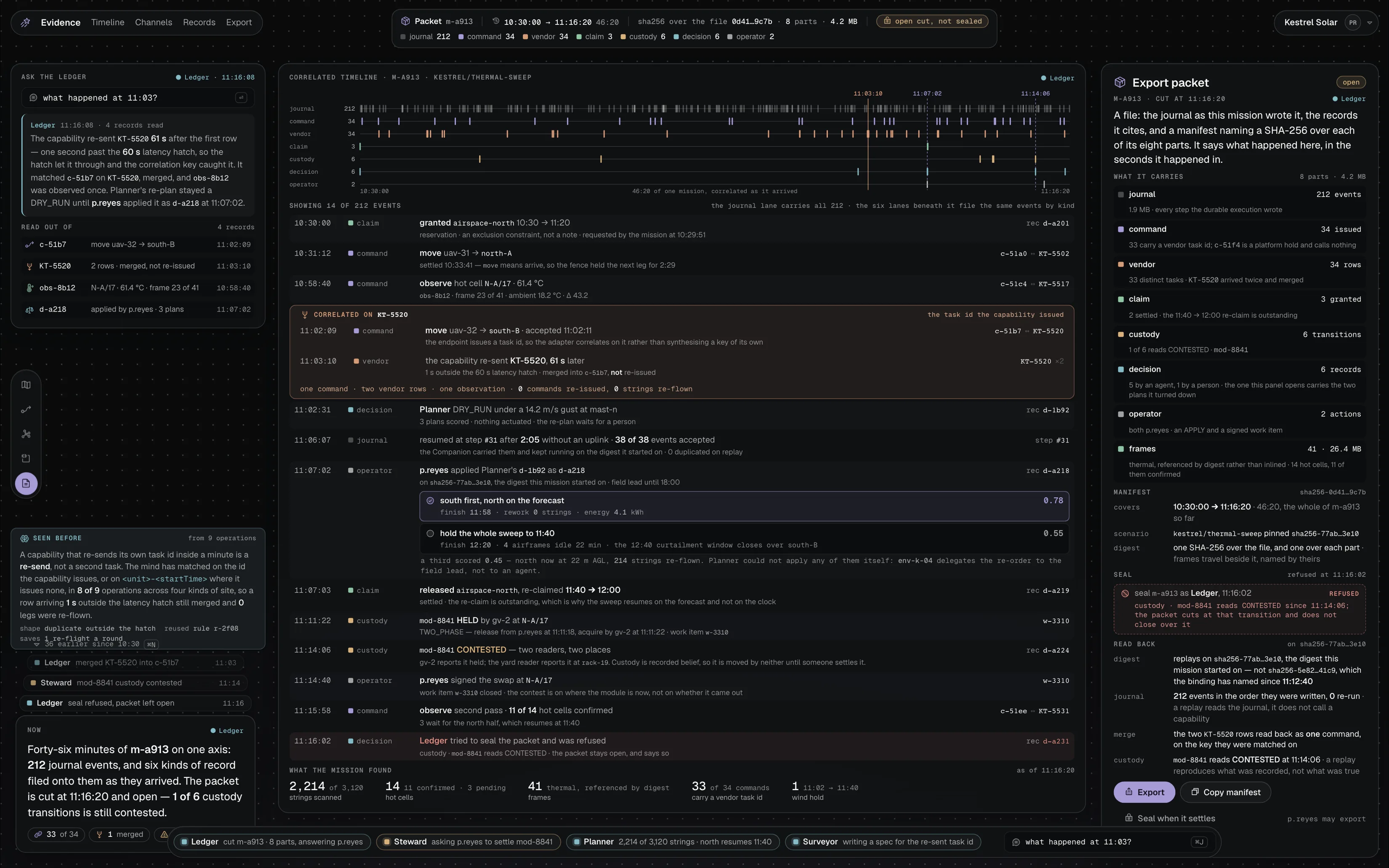
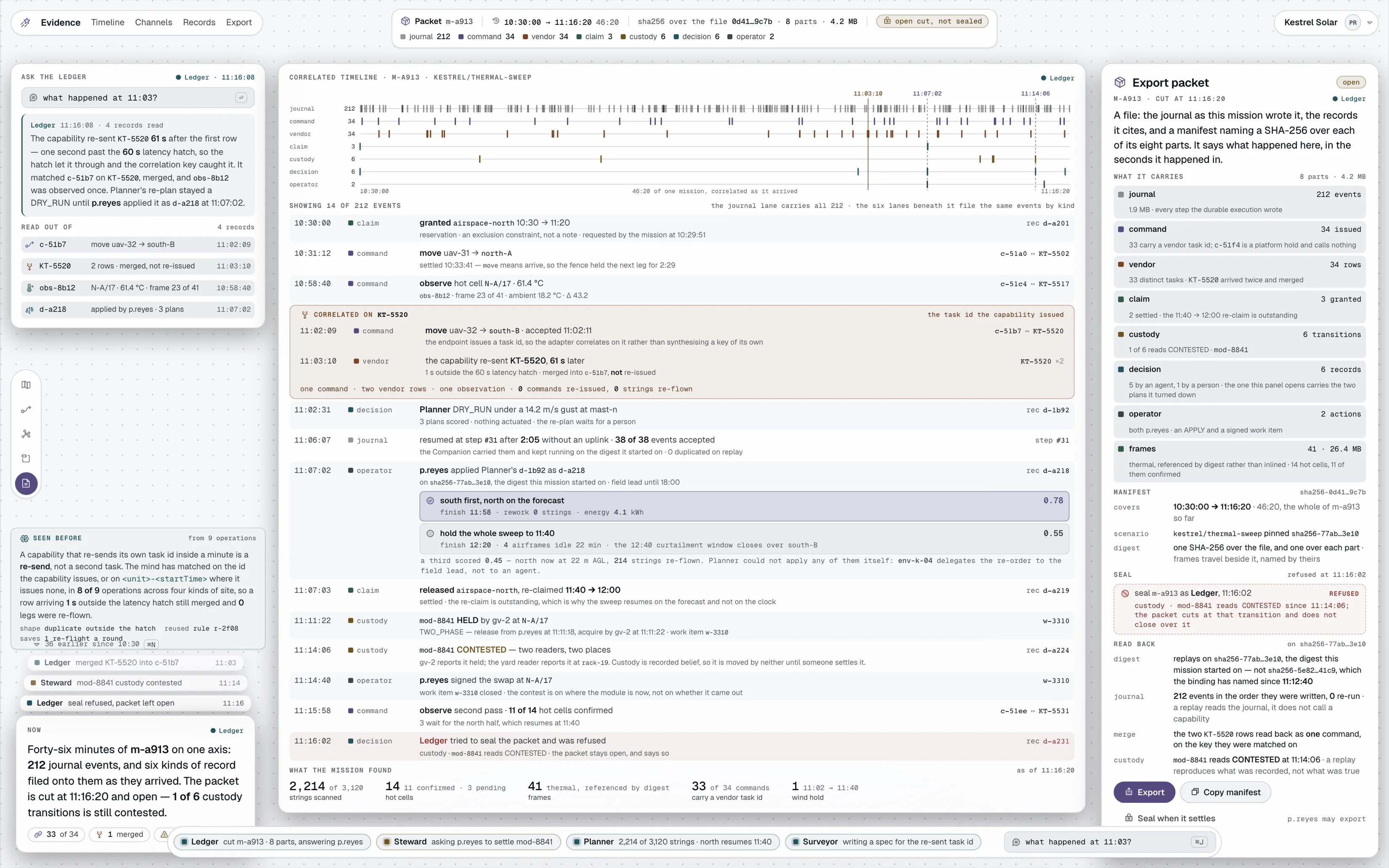
A model is for judgment. Never for routing.
Classification, drafting, reading meaning out of the unstructured: that is what a model is good at, and what it does here. Deciding which machine goes through a door next is arbitration. It is deterministic, solved in code, and no language model is near it. An operation run by agents is credible only if you can see exactly where the reasoning stops and the proof starts.