Humanoids and embodied AI
General-purpose bodies walking into work shaped for people. The model is ready long before the operation around it is. That gap is the whole problem.
Platform
The mind’s operating surface, and its feed. An avatar is only as capable as what it can take hold of, and a mind learns only what reaches it. Every part of this exists to be authored, and every part of it reports back.
The program is the operation itself, and agents write it. It executes durably in the cloud, and the Companion is the same runtime standing where the machine is. What we do not do is reach inside a body: the intelligence and the control loop in a humanoid or a vehicle stay its own. It arrives already able to think, and what it needs from us is a world to think about — an identity, a role, work, claims, delegated authority and a memory. We build the operation. The body brings the mind. And this is the platform’s other job, the one that makes it more than a runtime: it is the operating mind’s feed. It learns from a desensitised, abstracted model of the work: the shapes and first principles of how operations flow, never a site’s raw record. Your operational record stays in your organisation. The next operation it runs starts from what the last one taught.
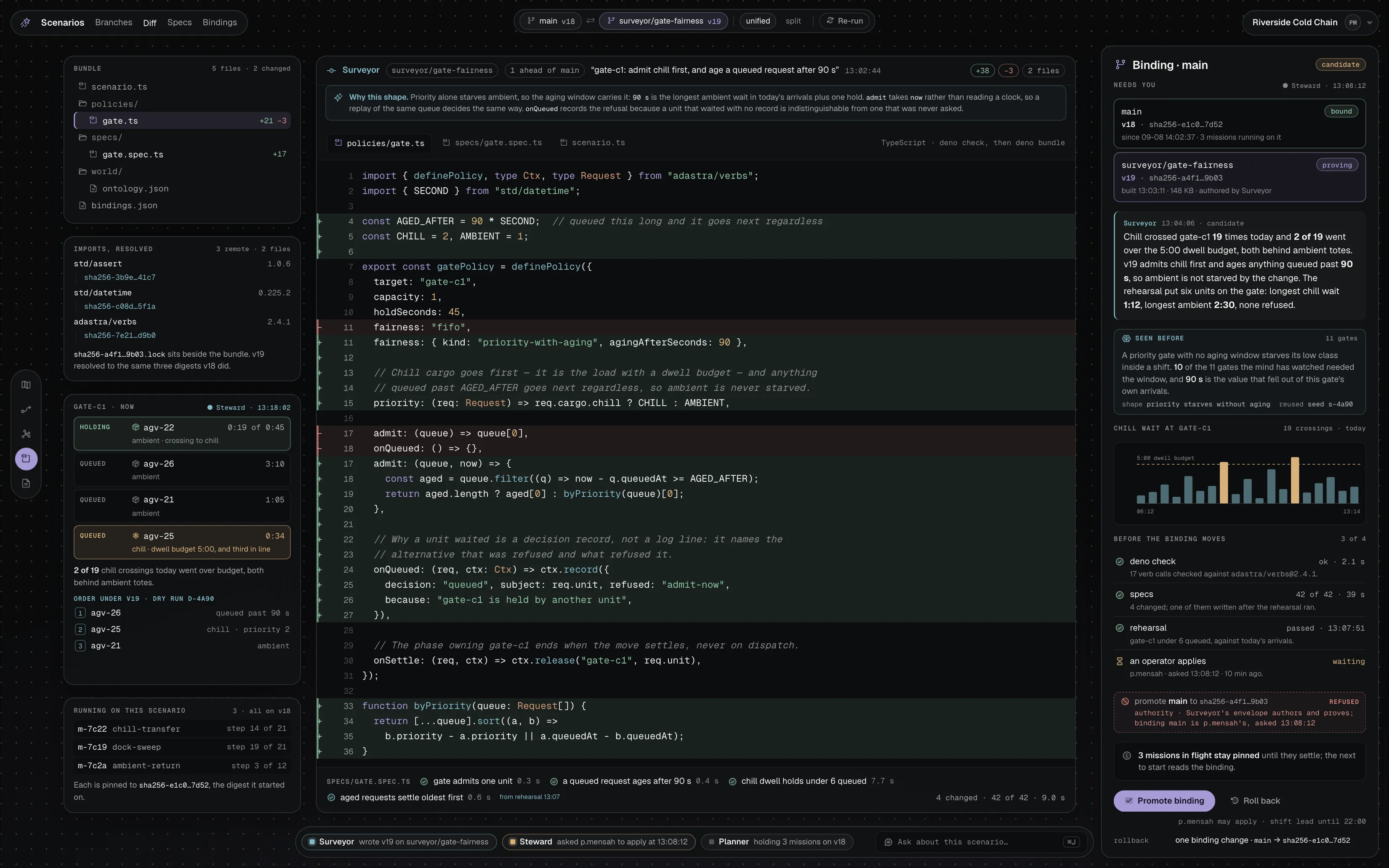
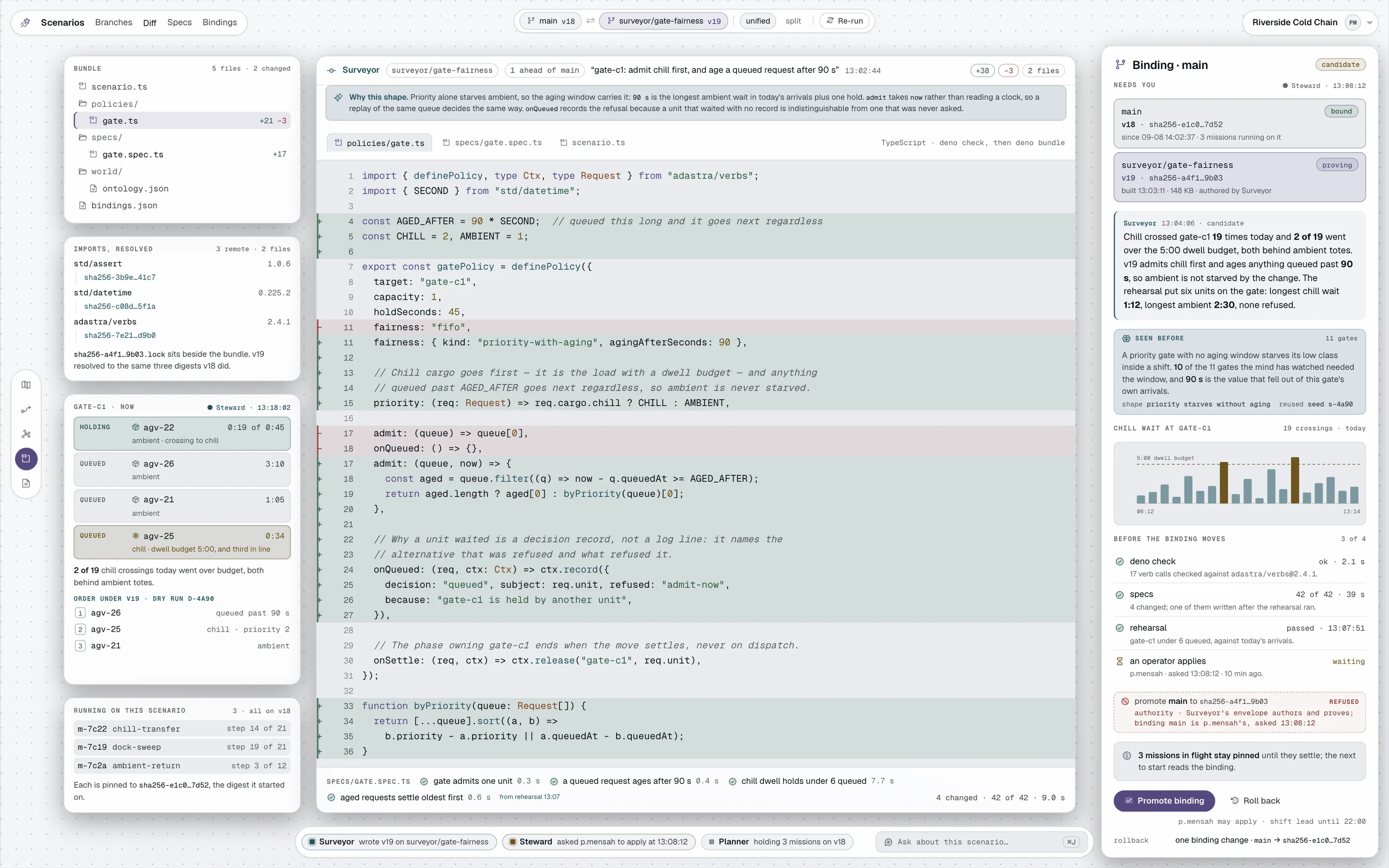
Scenarios. Plain TypeScript carrying one operation's world, records and logic, written by agents and people alike.
Missions. Each admitted once, journaled, and alive across a restart of the thing that runs it.
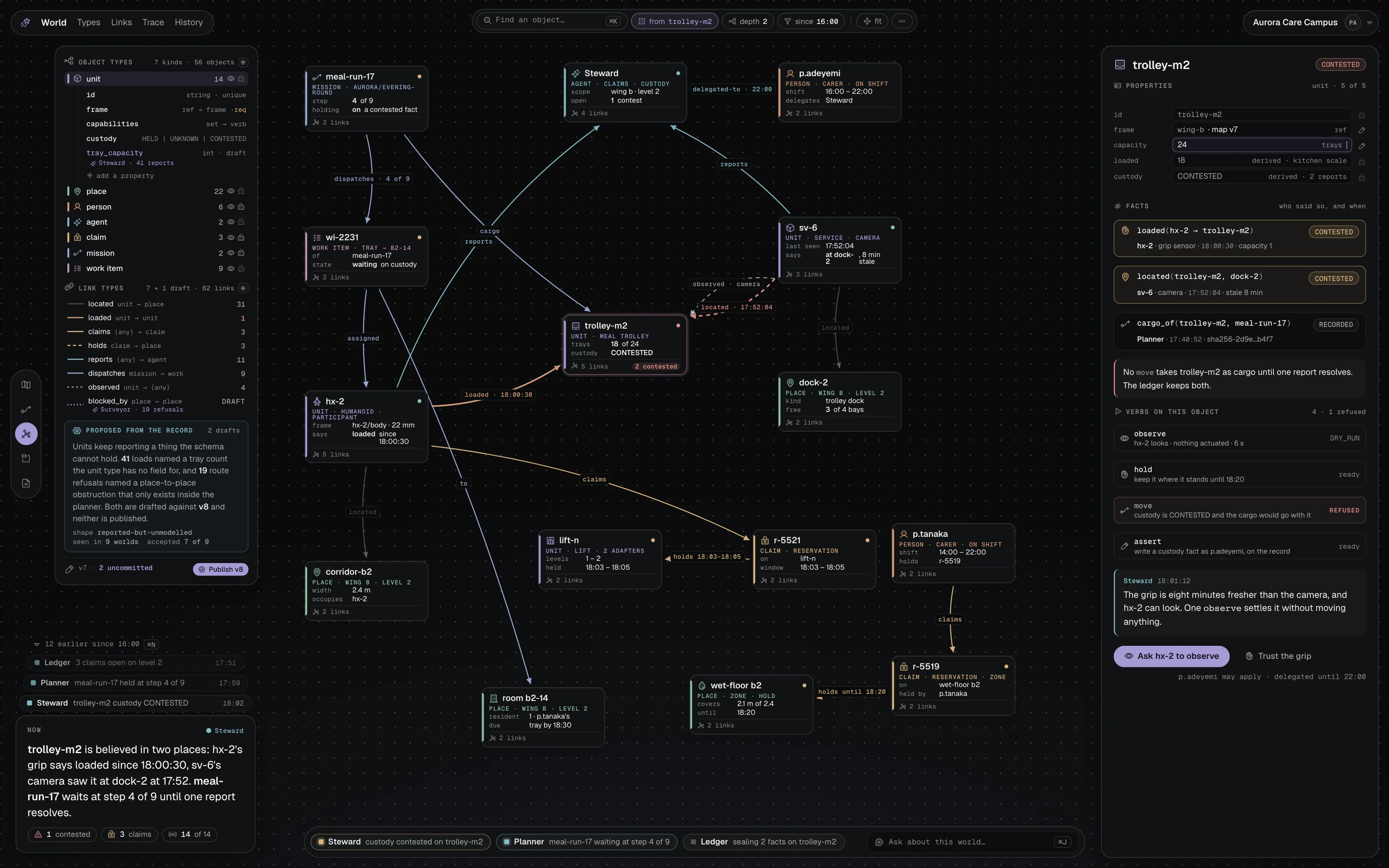
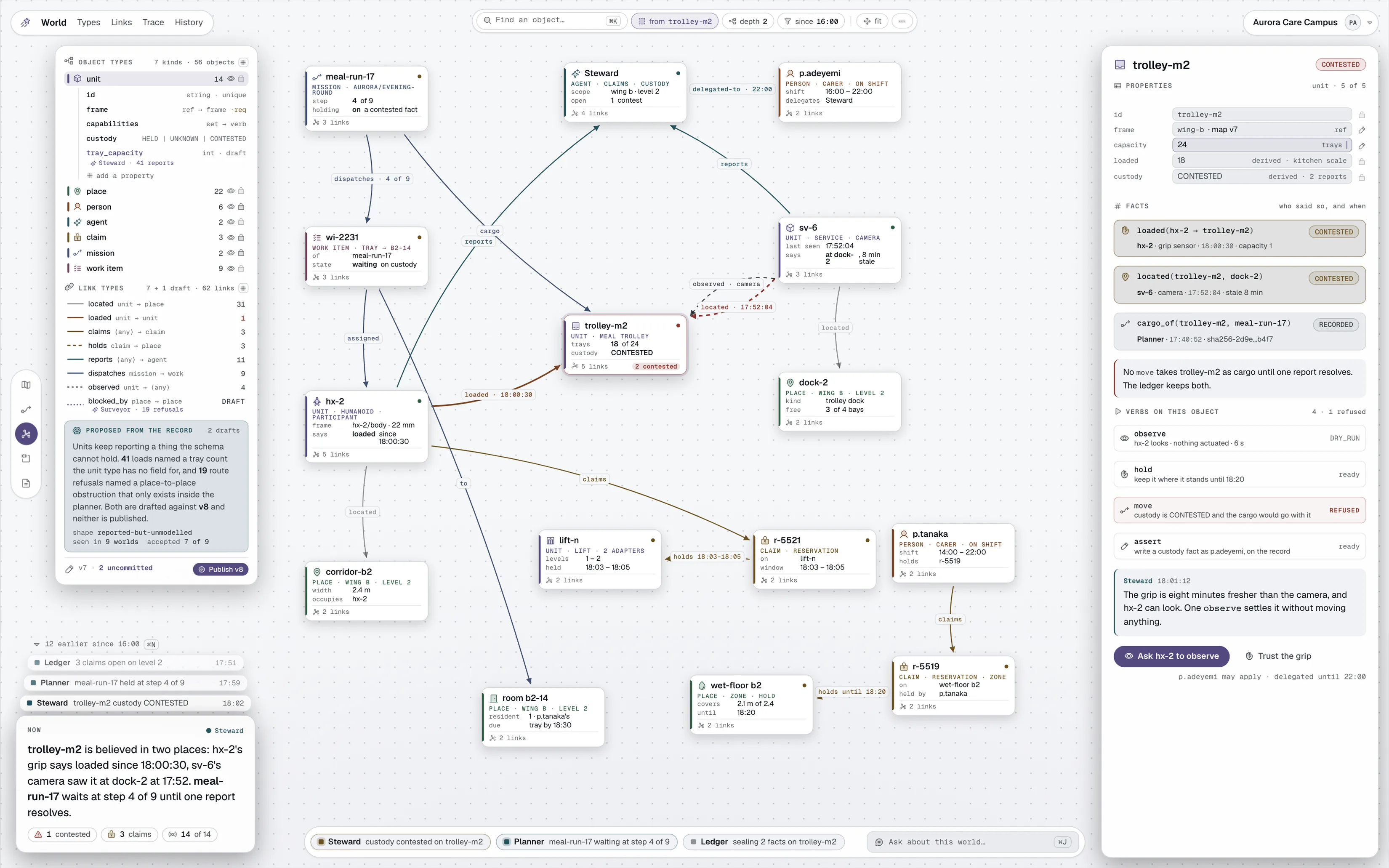
The world model. Units, spaces, claims and custody, one typed picture everything reads and writes.
Verbs. The only way a program touches a machine, a door or a person, and each one typed.
A primitive earns its place by carrying unchanged into an arena we have never seen. Nothing here names a kind of machine, which is why the same core runs a humanoid on a line, a drone survey over a district and a desk of digital workers. It is also why a model is a first-class actor here rather than a spectator.
A unit of work with a lifecycle, admitted once per key and executed on a durable journal. It outlives the process that started it.
A hold on a resource over an interval. Reservations are what the platform granted; custody is what the world reported, and the world is late, contradictory and sometimes silent.
The thing that acts and the thing acted upon are one primitive, so a carrier carrying a carrier needs no new type. An AMR, a drone, an arm, a conveyor, a person, an agent.
What a scenario may invoke. Move means drive there and arrive. A verb that returns on dispatch is a verb that lies about the world.
Frames, poses and symbolic locations with the transforms between them, from a bay on a line to a district on a map. A dock keeps its name after the site is re-surveyed.
Data that carries code. Pinned by the digest of its bundle, promoted by moving a binding, rolled back in one call.
An agent cannot run an operation it has to learn six vendor APIs to touch. Making everything behave as one system is not the headline. It is the precondition for the headline.
General-purpose bodies and every wheeled, tracked or legged unit, each behind the same contract.
Units whose work spans a district rather than a site, under the same missions and the same claims.
Lifts, doors, barriers, chargers and signals as first-class resources. A call that takes four messages on the wire takes one verb in your scenario.
VDA5050 spoken natively, so a compliant fleet joins without a translation layer of your own.
Whatever already runs your operation becomes one more capability rather than something to rip out.
One adapter against a typed port. Vendor N+1 changes zero platform lines, and the diff proves it.
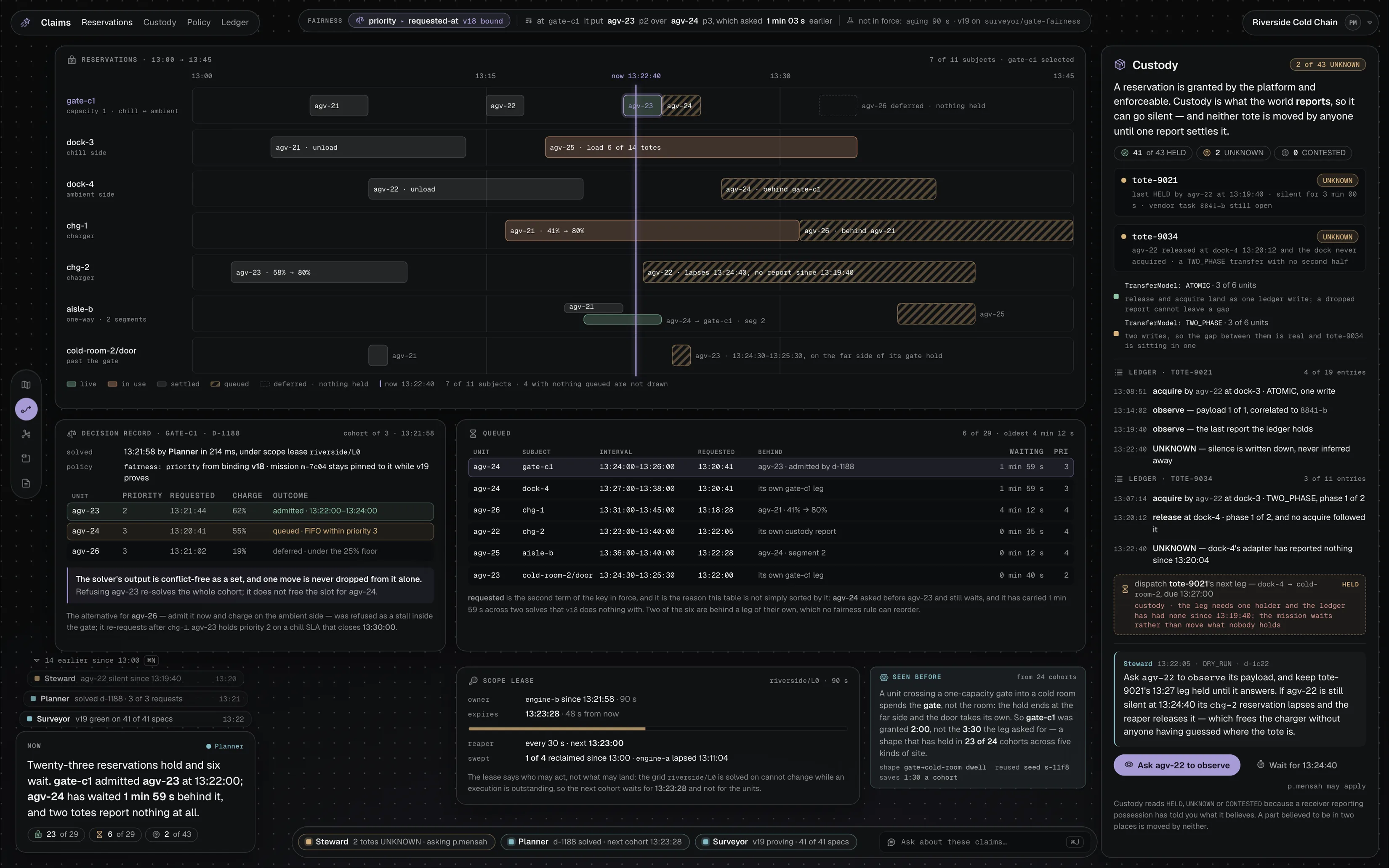
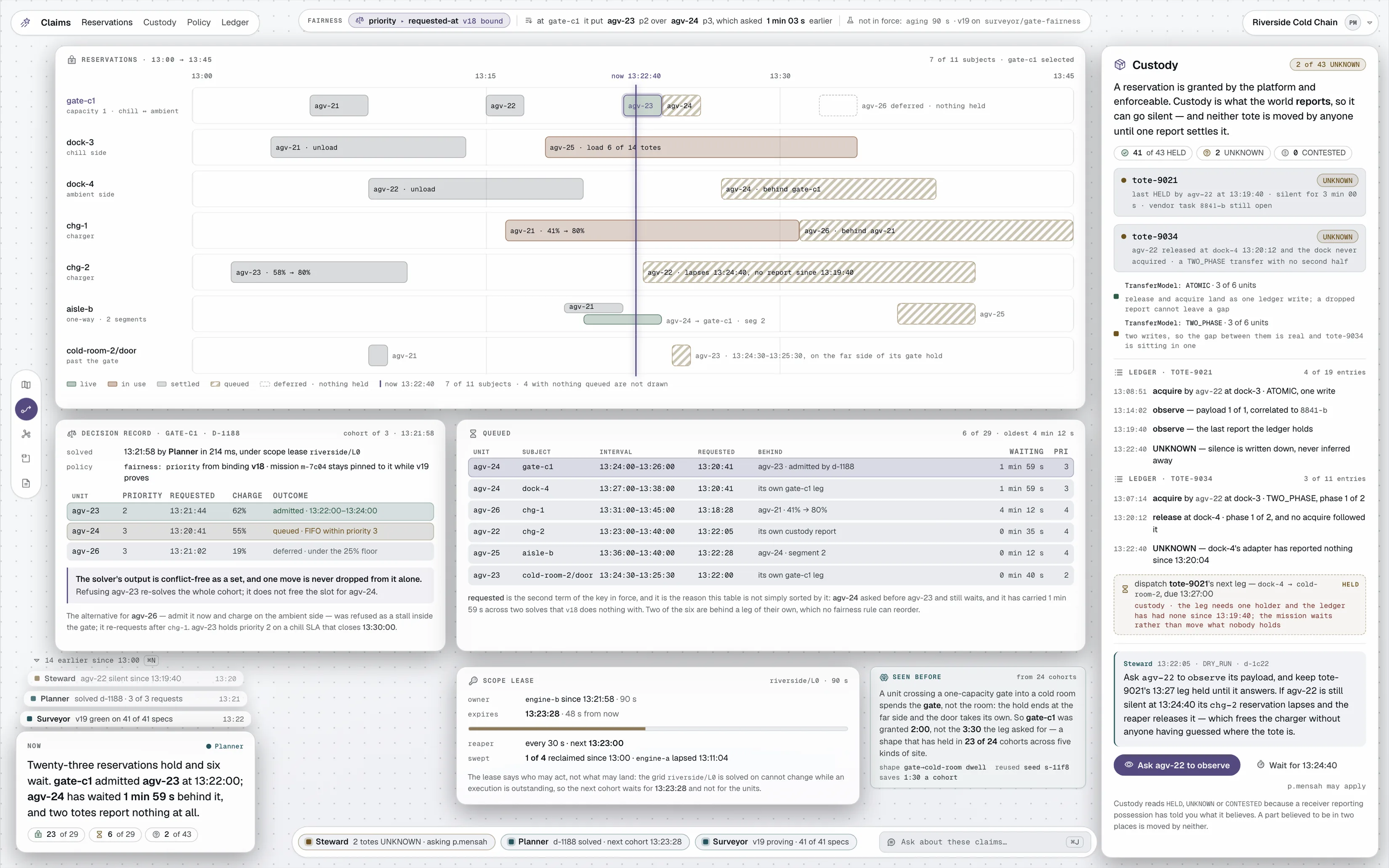
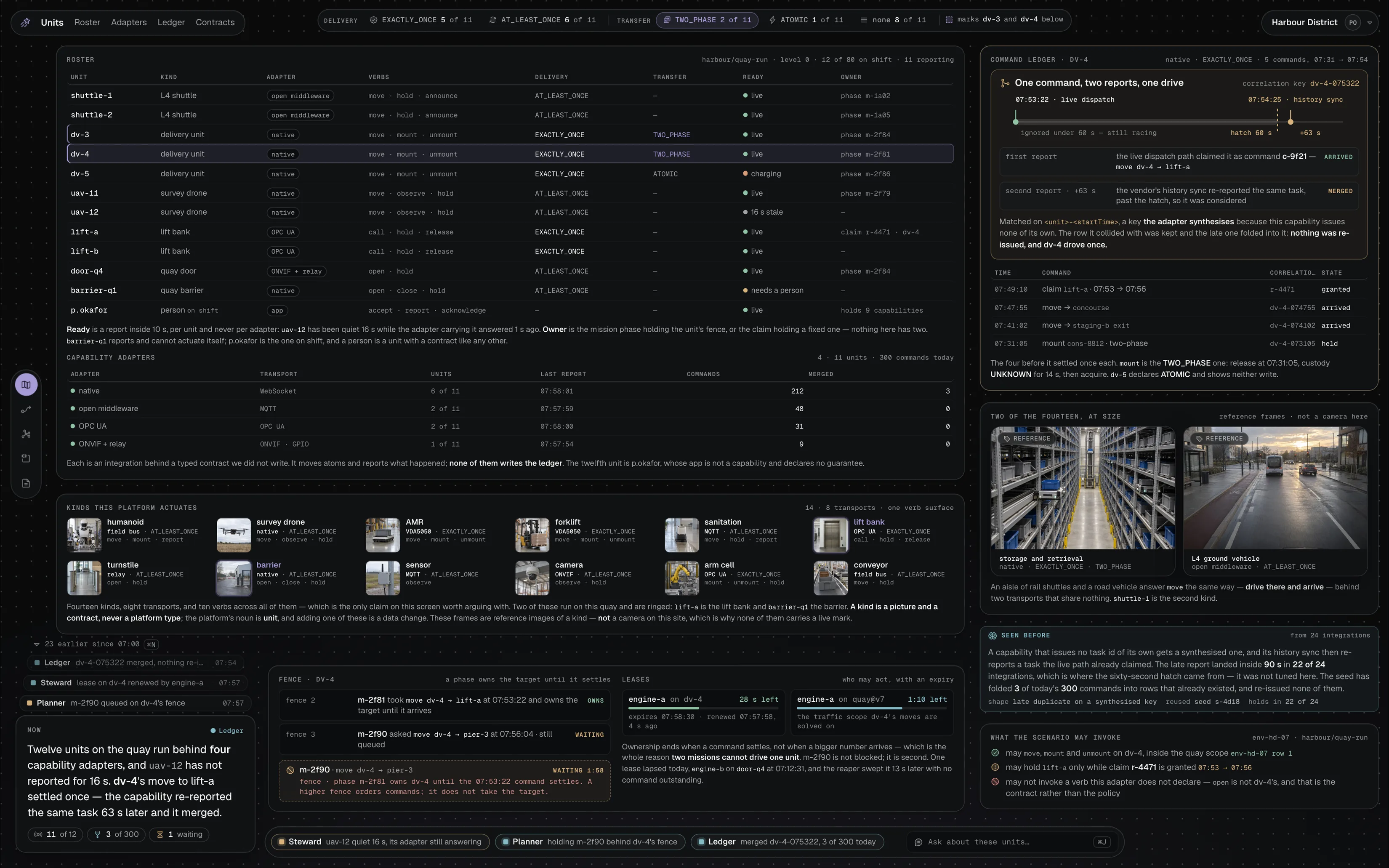
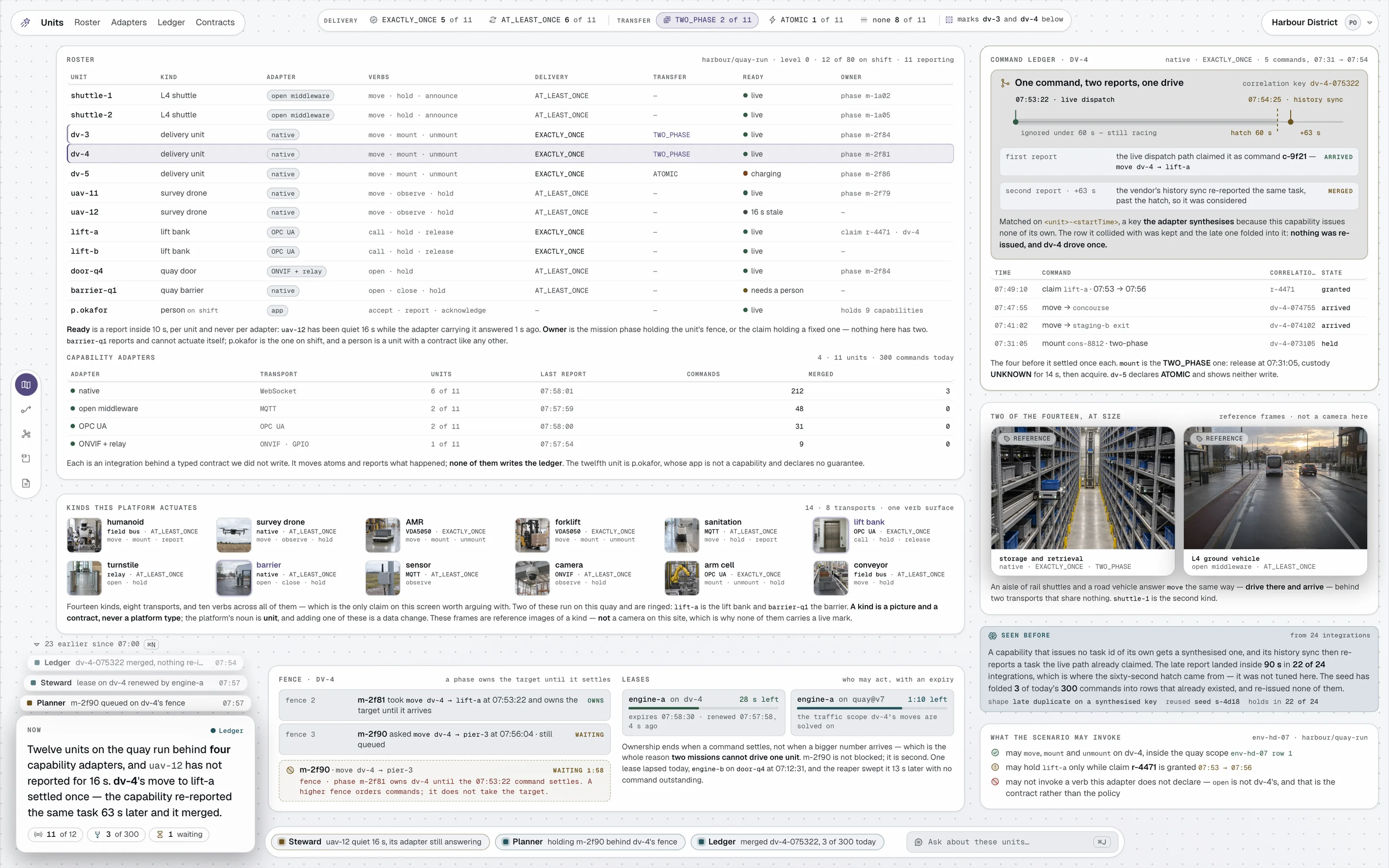
A humanoid joins the way a forklift does, and a vehicle crossing a district is the same primitive as an arm on a line, because nothing in the core knows what any of them is. A scenario is data an agent writes, so the next operation this runs is one nobody designed it for, and the platform will not be able to tell the difference.
General-purpose bodies walking into work shaped for people. The model is ready long before the operation around it is. That gap is the whole problem.
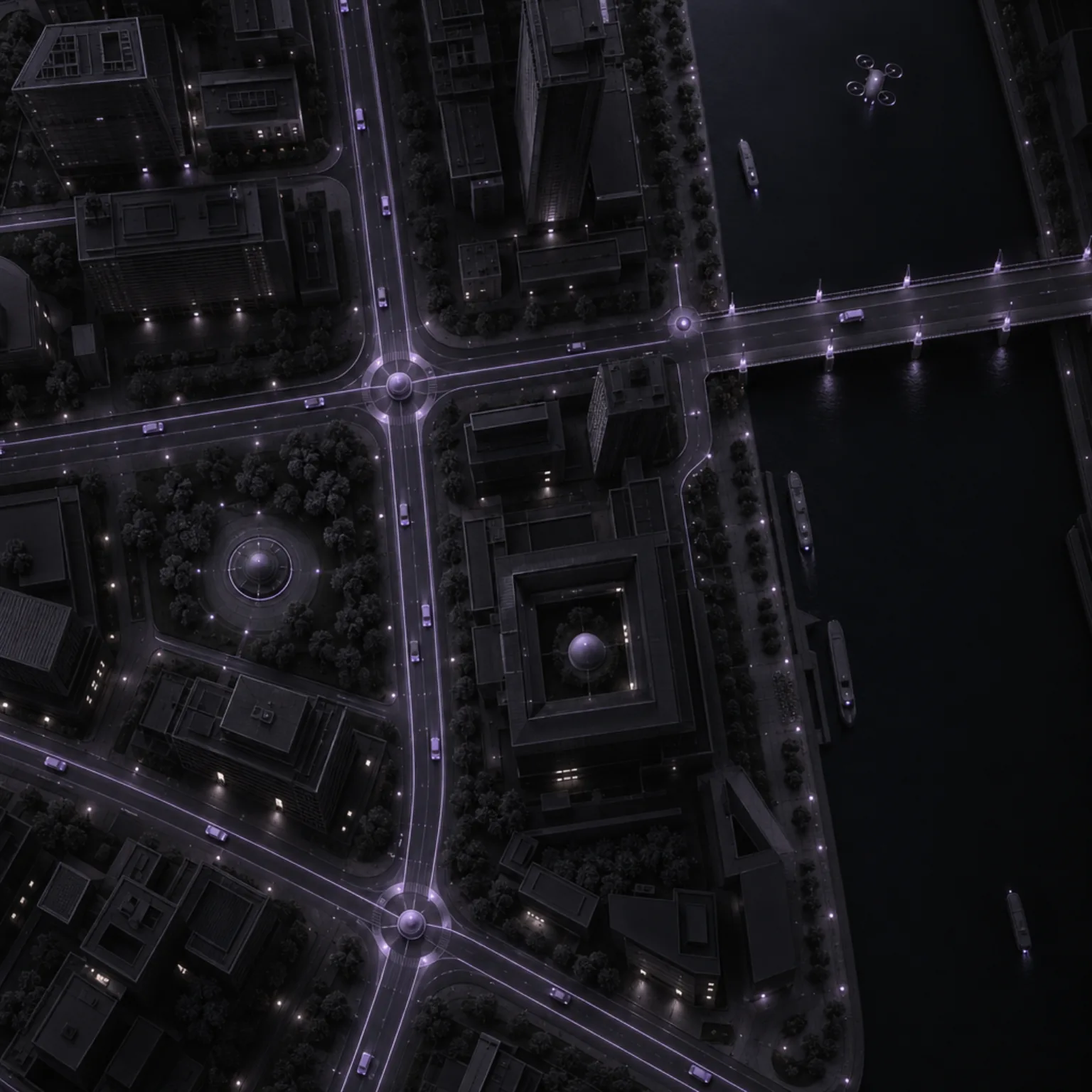
Autonomous vehicles, drones and public infrastructure as one system across a district. Not a fleet at a time, not a site at a time.
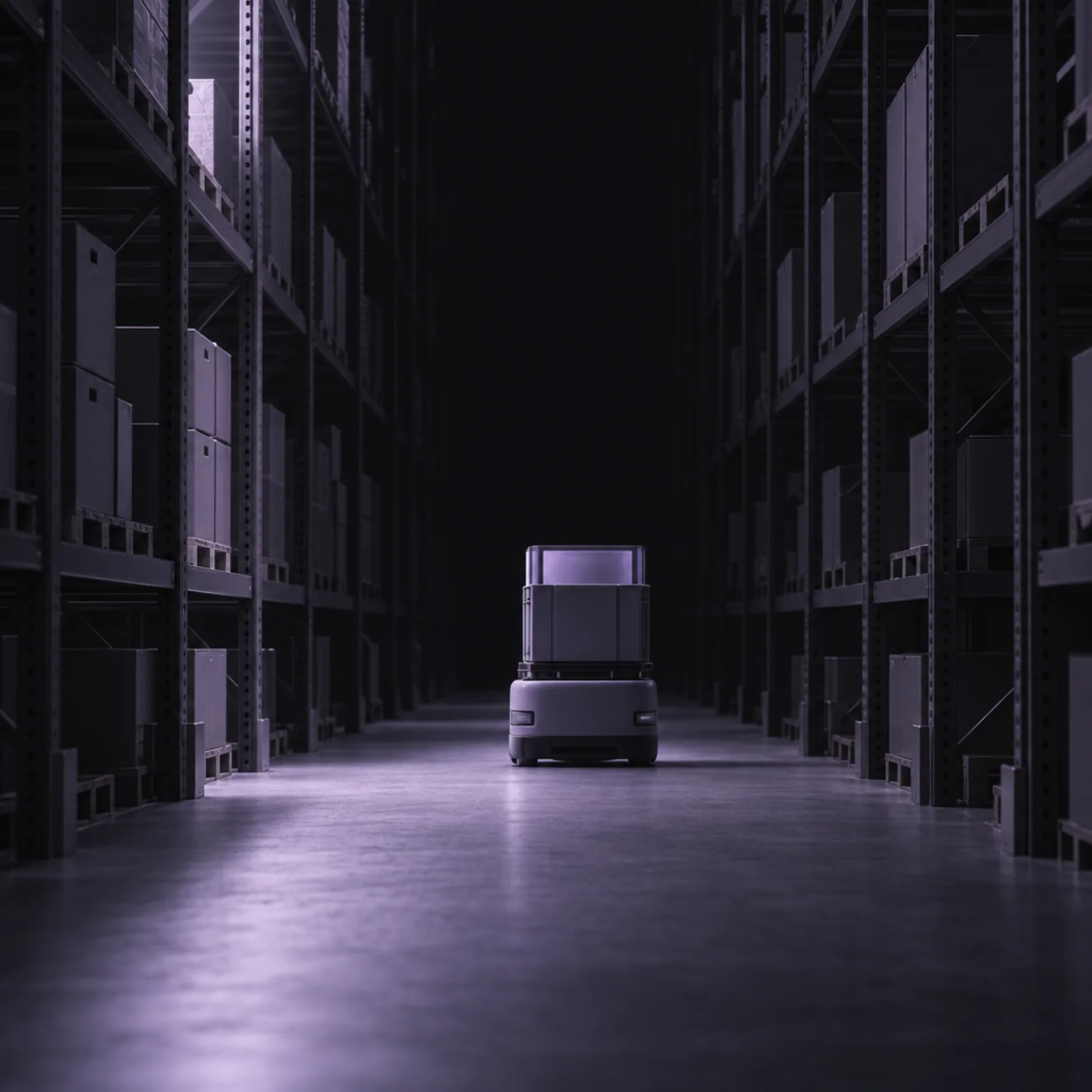
The most automation already installed, the least coordination between the pieces of it.

Digital workers beside physical ones, under one model, one set of permissions and one record.
Four pictures, because a page needs pictures. The core has no idea any of them exist.
A scenario is the ontology, the records and the logic for one operation, in a language your team reads and every model writes. Its identity is the digest of its bundle, never a tag, because a tag can be moved. A mission in flight stays on the version it started on.